


Nature - 2019 May - Vol 569 No 7754
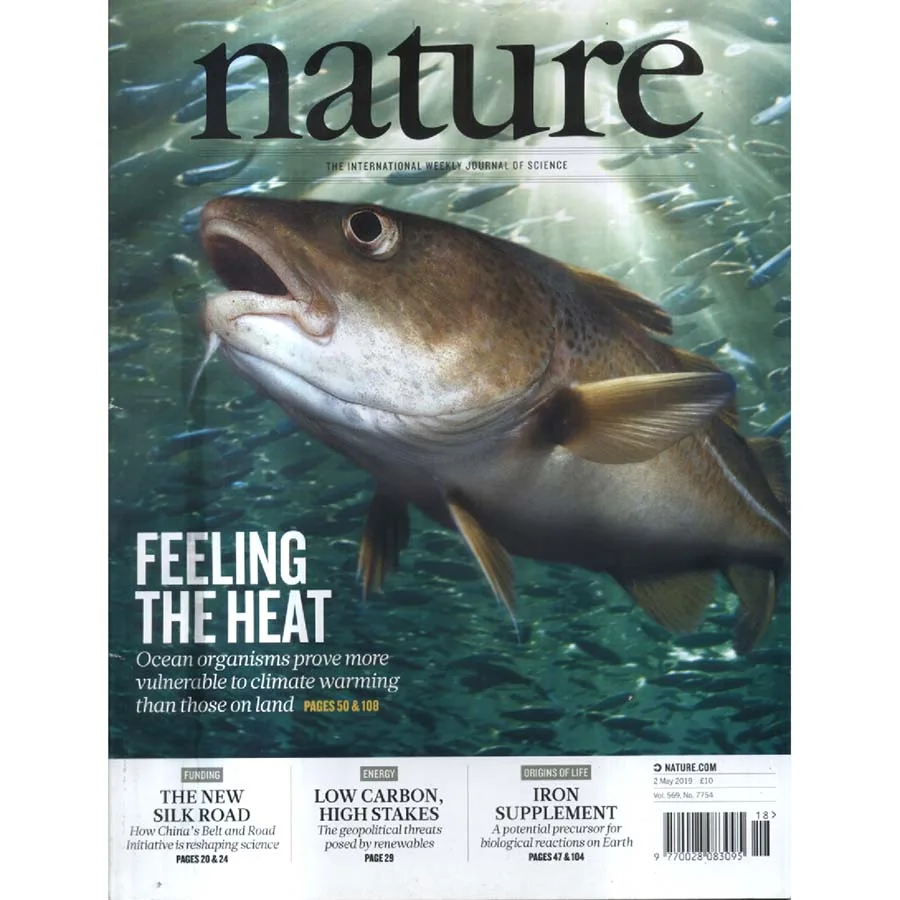
Publisher: Nature
Format: Paperback
ISBN: 9770028083095
There are magazines that politely explain science to the public, and then there is Nature – May 2019, Vol. 569 No. 7754, which prefers to stare directly into the machinery of existence and calmly report back with graphs. This issue emerges from that glorious period of late-2010s science when every week seemed to contain another discovery capable of rewriting textbooks, ethics policies, or both simultaneously.
As with all great copies of Nature, the cover radiates the unmistakable atmosphere of “important people somewhere are discussing something alarmingly complicated”. The artwork has that familiar Nature aesthetic — sleek, mysterious, faintly cosmic — designed to make readers feel both intellectually curious and mildly underqualified before even opening the first page.
Inside awaits the usual parade of humanity attempting to reverse-engineer reality itself. Articles move effortlessly between biology, physics, climate science, medicine, and technological innovation with the confidence of a publication that assumes readers are perfectly comfortable contemplating molecular processes over breakfast. Somewhere in these pages, researchers are likely solving problems so advanced they require entire disciplines most people have never heard of.
That is really the charm of Nature. It is less a magazine than a weekly status report from civilisation’s research department. Every issue quietly reminds readers that while ordinary life continues above ground — buses, supermarkets, awkward emails — scientists are beneath the surface mapping genomes, modelling atmospheres, manipulating materials, and discovering strange things in distant corners of the universe.
There is also something wonderfully theatrical about owning copies of Nature. They sit on shelves radiating intellectual seriousness, suggesting their owner occasionally engages in deep reflection on quantum mechanics or evolutionary biology. In practice, many copies spend years being respectfully admired while readers repeatedly promise themselves they will “definitely read the main feature properly at the weekend”. This is not failure; it is part of the authentic Nature experience.
The magazine also captures a fascinating historical moment. By 2019, science had become simultaneously more powerful and more unsettling. Gene editing was becoming real, climate discussions increasingly urgent, artificial intelligence rapidly advancing, and biology itself beginning to sound programmable. Nature documented all of this with extraordinary calmness, as though rewriting the future were simply another item on the weekly editorial schedule.
And then there is the irony that so much of humanity’s greatest intellectual effort ends up compressed into a glossy publication that may eventually sit beside someone’s bed for four years with a bookmark permanently lodged on page 17. Few objects better represent modern aspiration than an unread copy of Nature.
Condition is listed as Good, meaning this copy has survived the traditional hazards faced by elite scientific journals: overfilled backpacks, office desks occupied by exhausted academics, coffee placed far too near important diagrams, and prolonged residence in piles labelled “serious reading”.
A wonderful issue for science enthusiasts, aspiring polymaths, collectors of intellectual ephemera, or anyone who enjoys magazines that casually imply humanity may be only a few research grants away from fundamentally altering the structure of reality.
Keep browsing: See more Nature Journal books Other books by Nature
